programming
-
expand_morePulse cross-filterBasic strategy: using a flexible, controllable signal, which has a range going from constant '1' ( 1 sample = no signal alteration) to noise (= infinite alteration; of course within techn. limitations), as the transforming cross-filter signal, in order to create and control as many possible sonical/musical effects of the cross-filter as possible. This is a real-time implementation, so that one can be in control of the many musical possibilities of the cross-filter, make smooth transitions between them etc., in real-time.
signal flow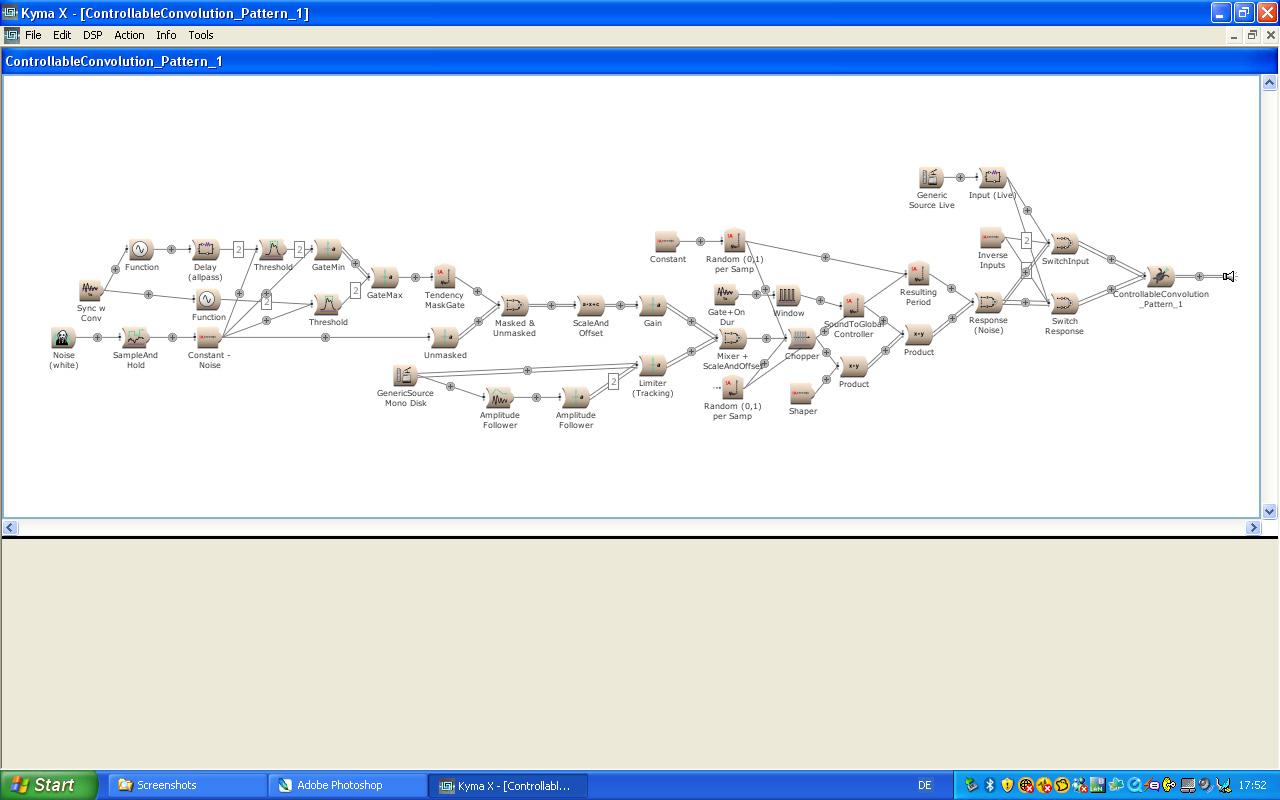
-
expand_moreCriss cross-filterCross-filtering the various timbres of one instrument with each other, in real-time. Variation is created simply by a delay and a time modulation algorithm (before cross-filtering the signal). Especially with new, exotic instruments like for example the knifetable this can lead to astonishing results.
signal flow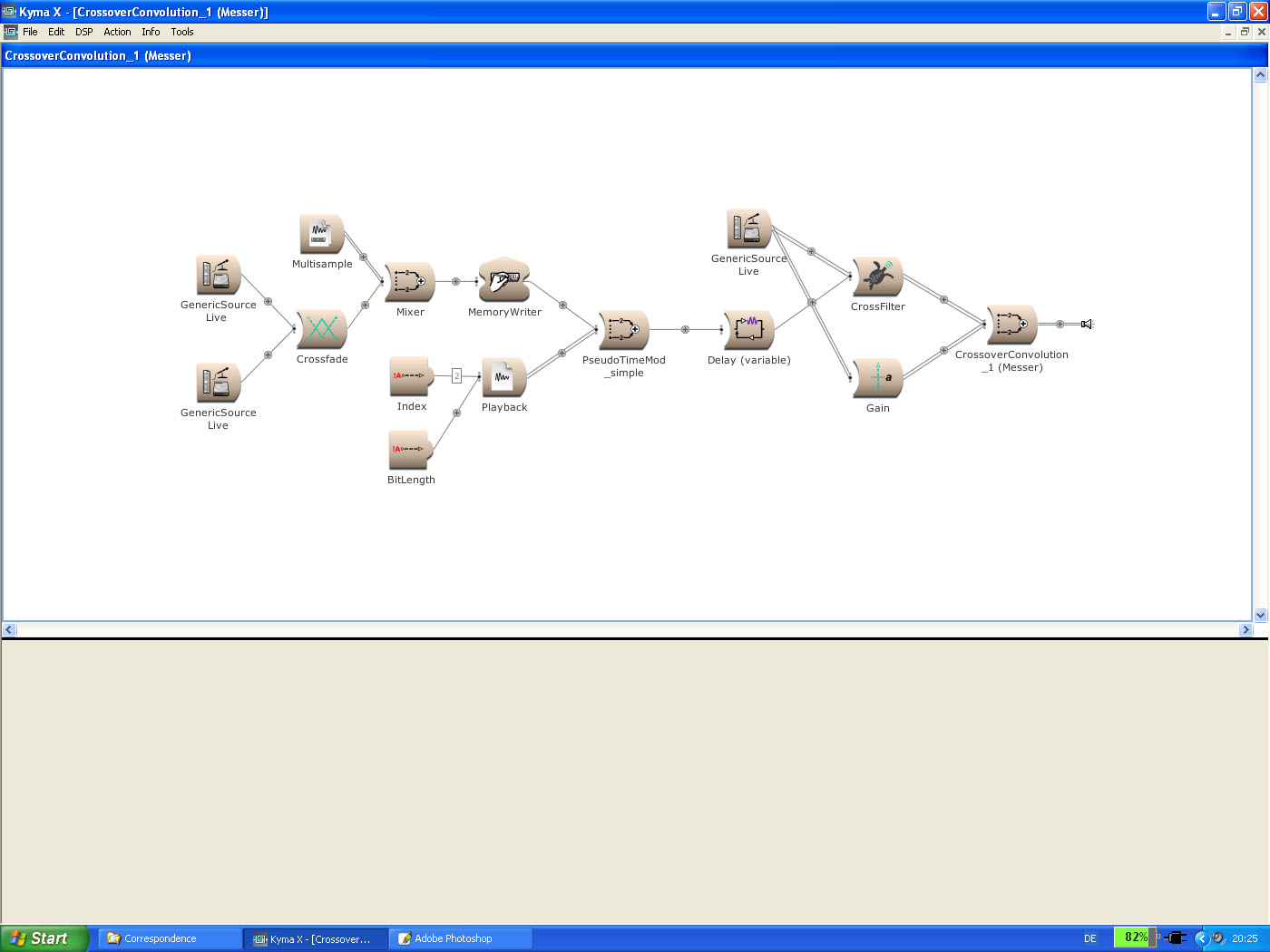
Cross-filtering two voices, in this case an adult voice with a child voice - notice that the length of the response file (the child voice) first gradually increases before it decreases again towards the end.
-
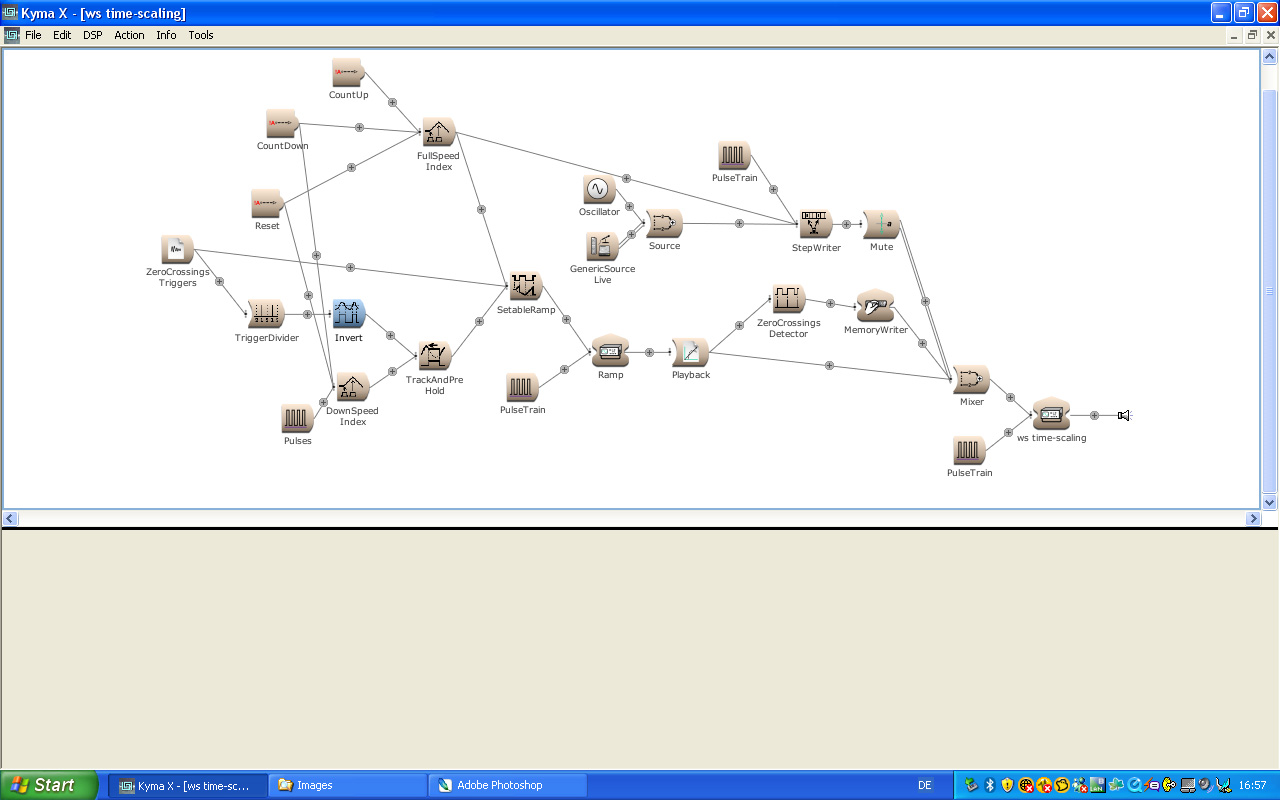
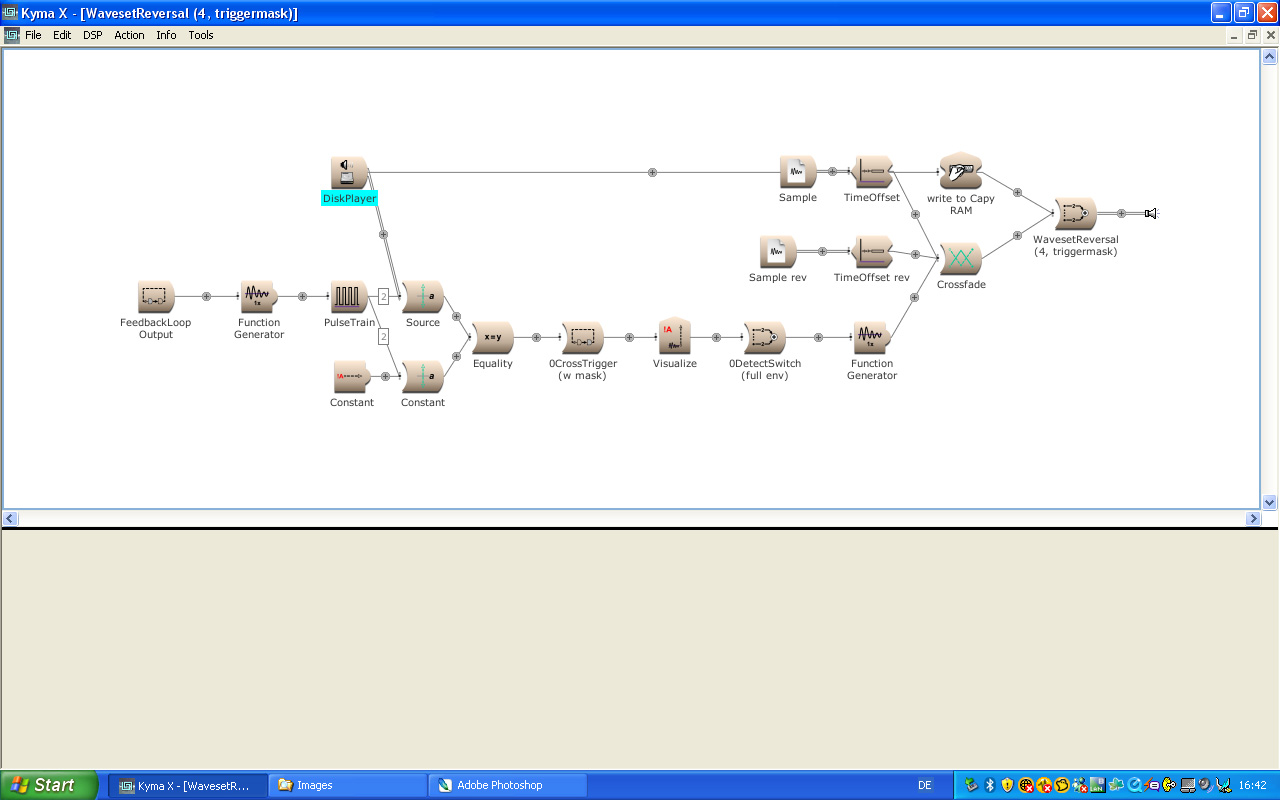
expand_moreWaveset real-timesome examples of real-time implementations and spin offs of Trevor Wisharts waveset technique in kyma (programming language):
- Waveset timestretching (sample domain), by Camille Troillard -
signal flow
- Waveset reversal (control signal domain) -
signal flow
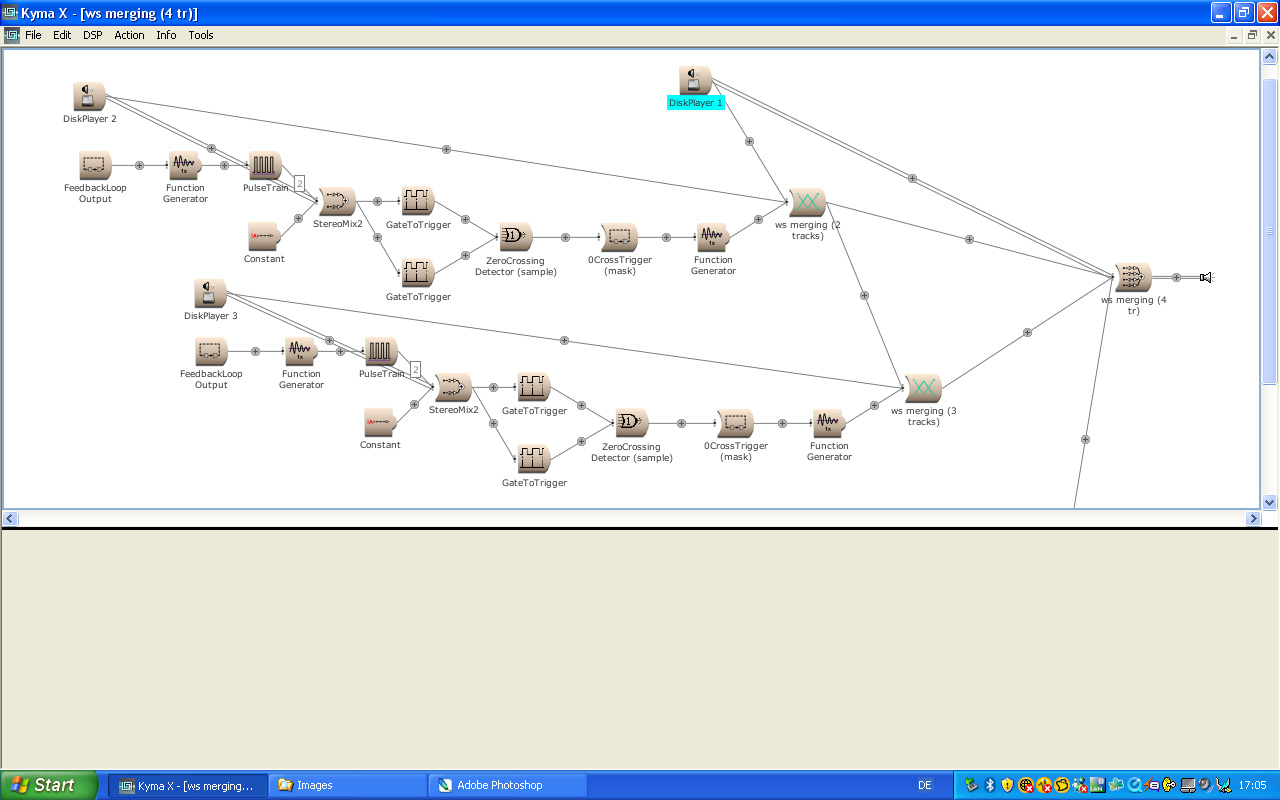
- Waveset merging (control signal domain) -
signal flow
- Waveset timestretching (sample domain), by Camille Troillard -
signal flow
-
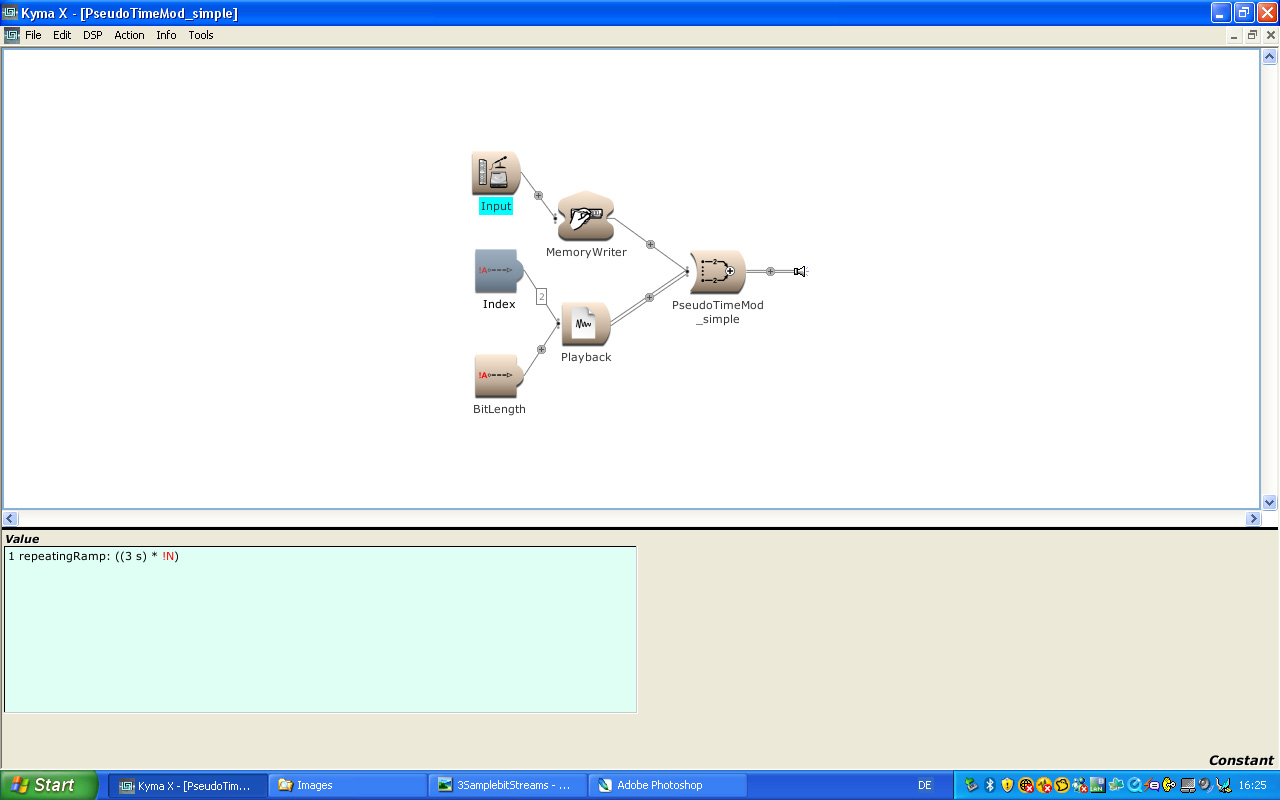
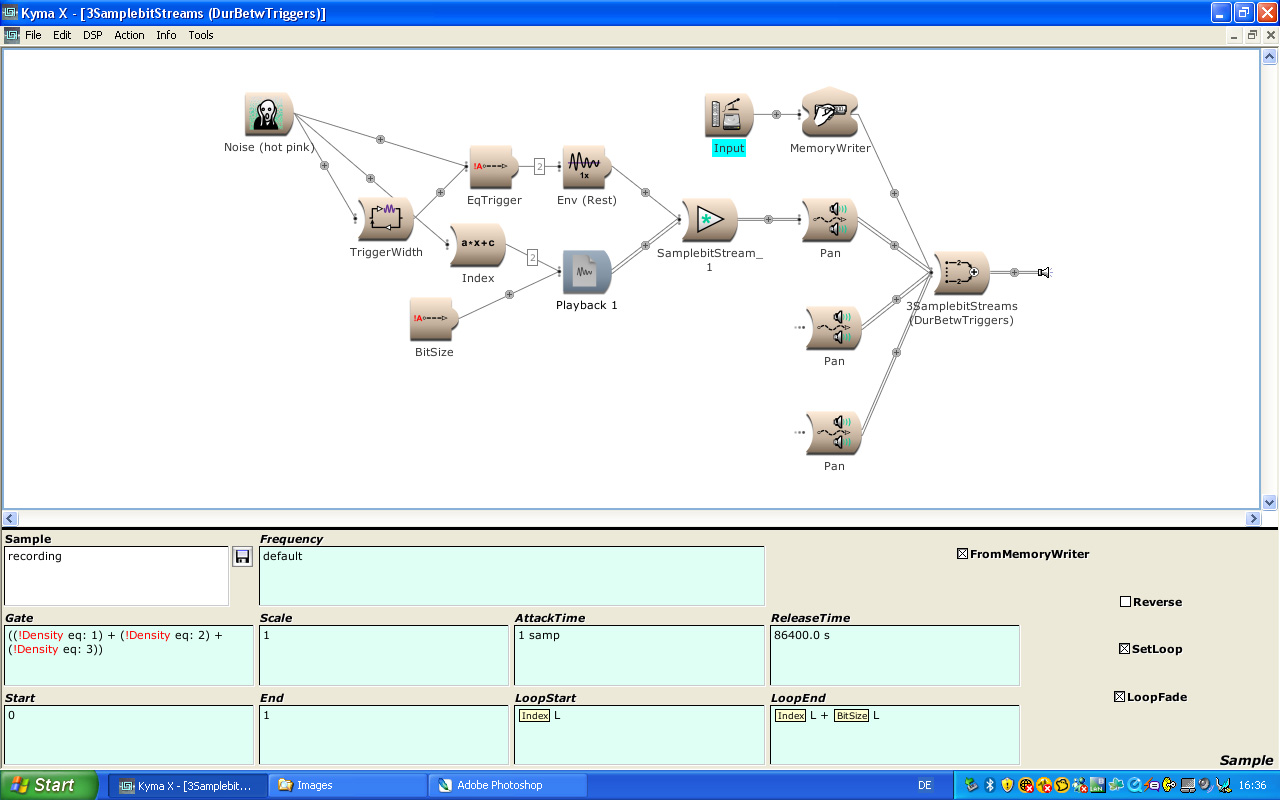
expand_moreSamplebit manipulationtwo examples for a time-modulation algorithm dividing the signal into bits:
- Pseudo time modulation, by Camille Troillard -
signal flow
- 3 Samplebit streams -
signal flow
- Pseudo time modulation, by Camille Troillard -
signal flow
-
expand_more1st patch for Steve ReichEin Kyma-patch inspiriert durch die Reichsche Phasing-Techniken, wobei mich seine Techniken zu einer eigenen Implementierung, aber auch insbesondere zu einer anderen, vielleicht neuartigen Anwendung in Kyma inspiriert haben. Diese Anwendung basiert auf einer einfachen (Low-Frequency-)Oscillator-Crossfade-Technik. Dabei bewegt sich u.a. ein Crossfade-Modul zwischen einem Pattern mit weichen Malletschlegeln und demselben Pattern gespielt durch harte Malletschlegel. Neue „Phasen-Verschiebungen“ entstehen nun durch eine minimale Verkürzung der „Crossfade-Oszillator“-Periodendauer (dies gllt auch für entsprechende Subdivisions-Perioden), im Verhältnis zur Ausgangs-Dauer der Pattern gesehen. Dadurch verschiebt sich das Pattern mit harten Malletschlegeln gespielt. Diese neue „Phasen-Verschiebung“ resultiert auch in klanglichen Verschiebungen/Veränderungen, da sich das Crossfade-Modul graduell durch die beiden unterschiedlichen Timbres, zu unterschiedlichen Frequenzen bewegt. Es ist vom Prinzip her ähnlich mit meiner „normalen“ (mit Reich verwandten) Phasenverschiebung, hat aber durch eine andere Implementierung klanglich andere Resultate. Am Ende des zentralen Teils ist die Crossfade-Frequenz so hoch, dass Vibrato-artige Effekte entstehen. Die Verschiebung ist dann fast rein klanglich, nicht mehr rhythmisch.
signal flow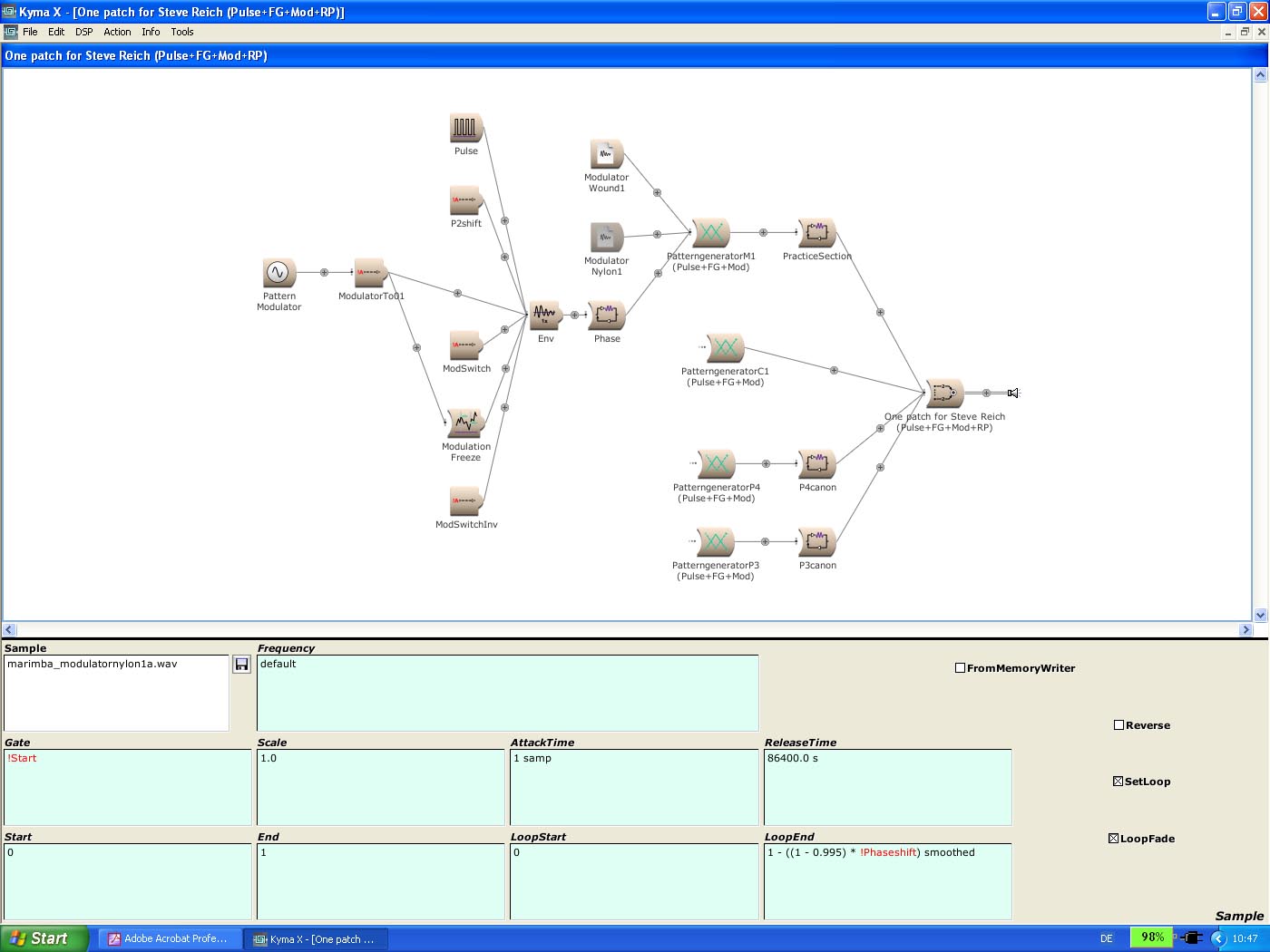
-
expand_moreNoise delayThis can be used as an alternative technique to create frequency and amplitude fluctuations/deviations. Furthermore, by using multiple noise delay modules, the illusion of a chaotic sound-mass can be established.
- Example 1 (frequency and amplitude fluctuations/deviations) -
signal flow
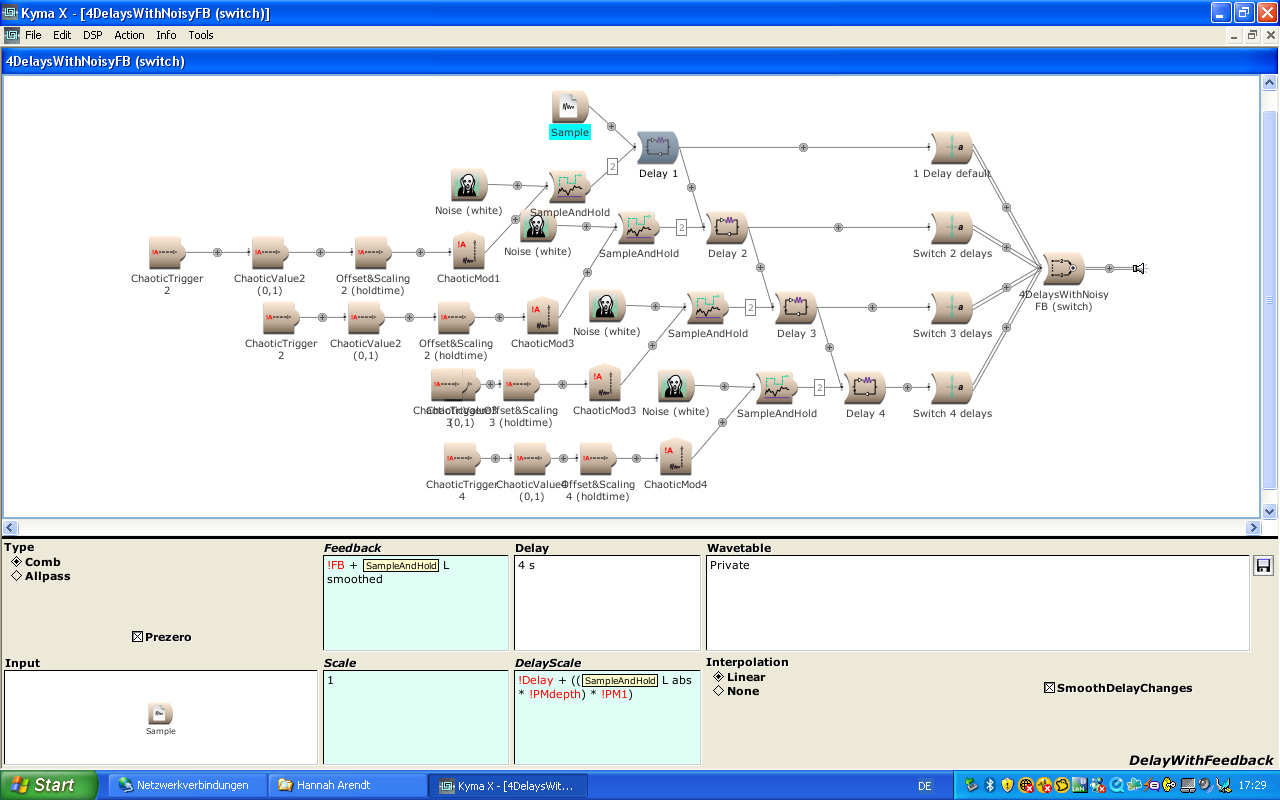
- Example 2 (illusion of sound-mass) -
signal flow
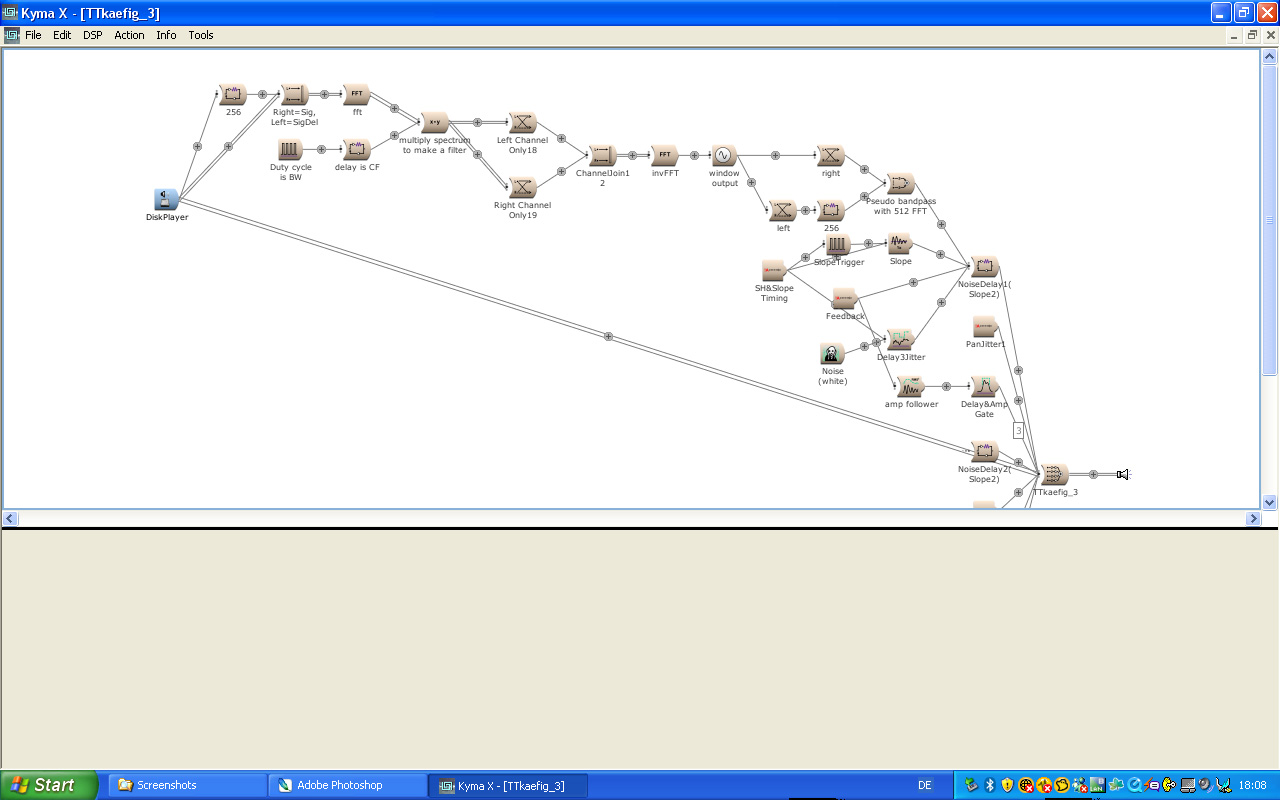
- Example 1 (frequency and amplitude fluctuations/deviations) -
signal flow
-
expand_moreEbow samplera sampler with ebow samples (ebows vibrating piano strings), build in kyma. Here an excerpt from "pulses and drones".
signal flow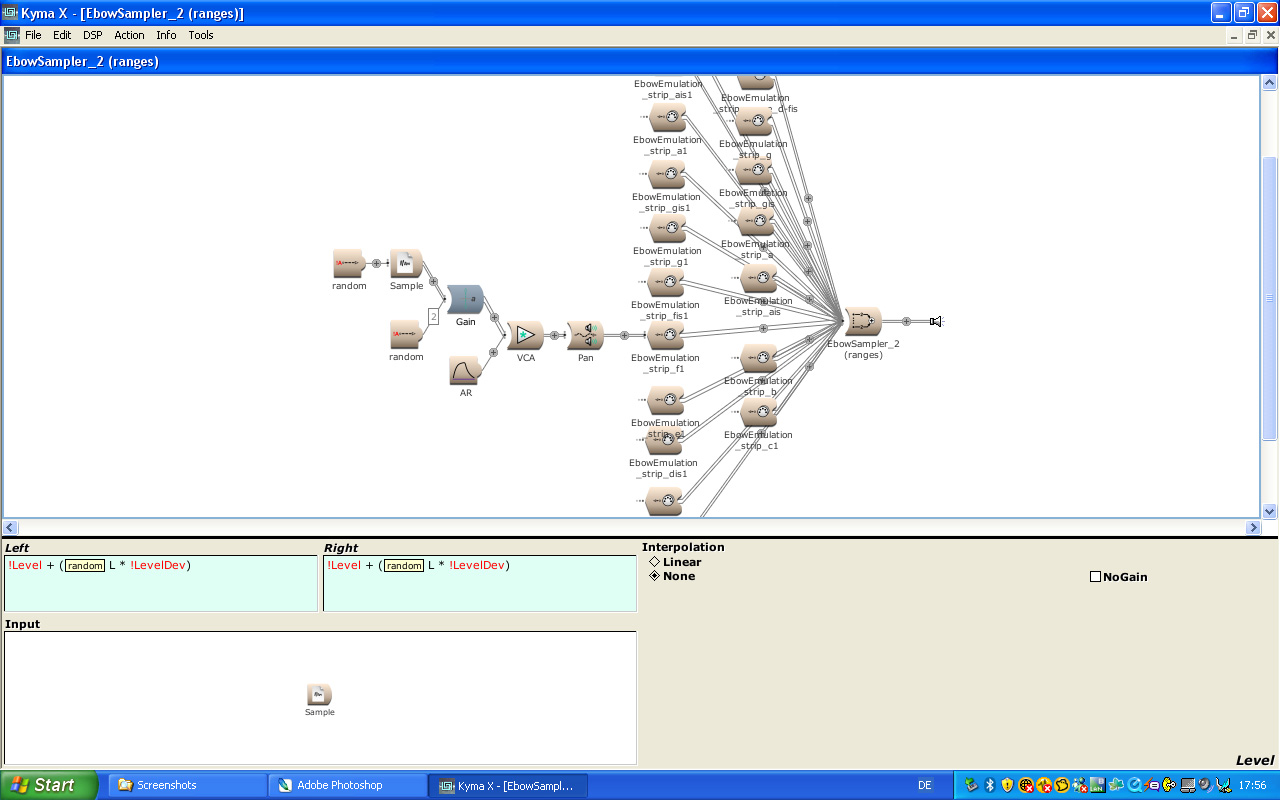
-
expand_moreRandom releasea live capture and loop idea which embraces granular sounding textures (releases) as well as reversing a.o.
signal flow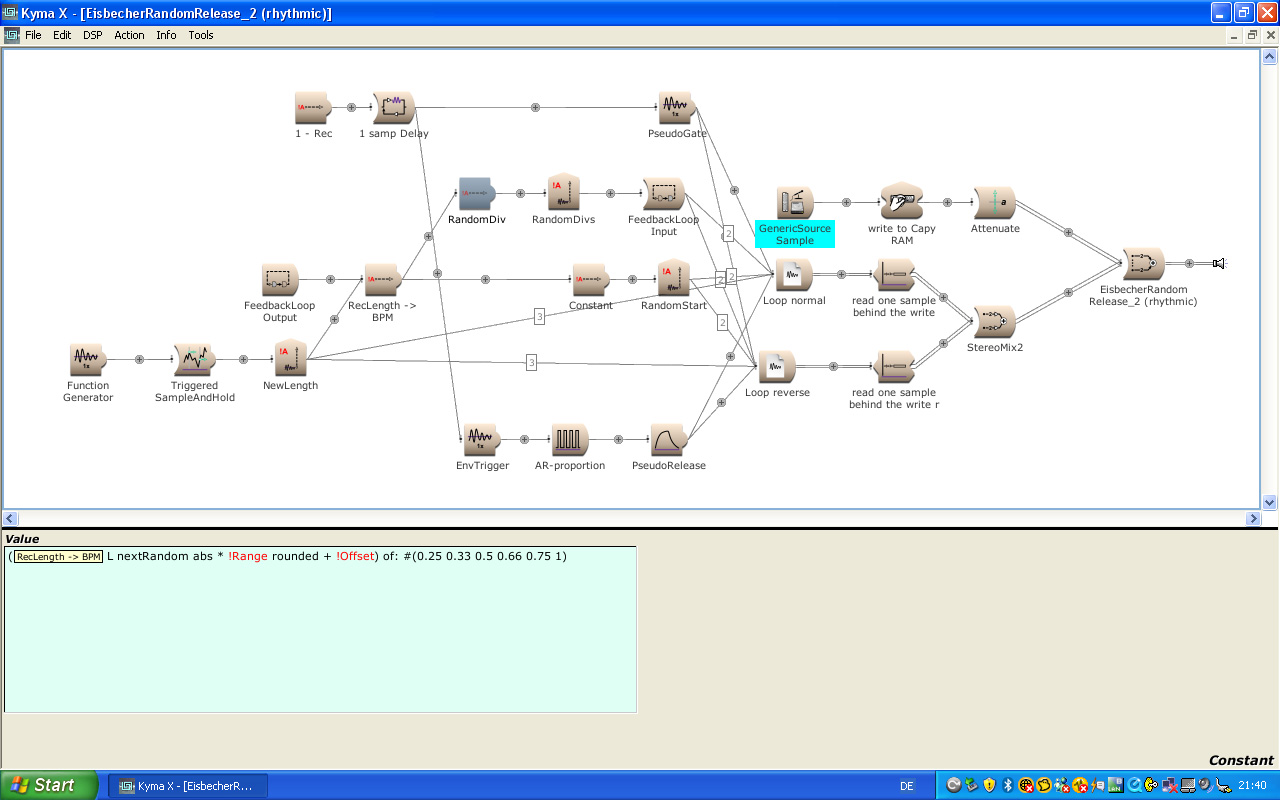
Florian Wittenburg
Gemeindeweg 55
47533 Kleve
Telefon: + 49(0) 151 74201762
E-Mail: florianwittenburg(at)gmail(dot)com
Gemeindeweg 55
47533 Kleve
Telefon: + 49(0) 151 74201762
E-Mail: florianwittenburg(at)gmail(dot)com